
Fall land clearing in Jay County, Indiana works best when it is planned around three things: the leaves are down so you can see the ground, the peak nesting season for cottontails is over, and the hunting dates are on the calendar. Ridgeline Corridor Services clears brush and trees across Portland, Dunkirk, Redkey and the rest of Jay County, and east across the state line into Fort Recovery, Ohio. Late fall is also the right time to decide what stays. Clearing does not have to mean clearing everything.
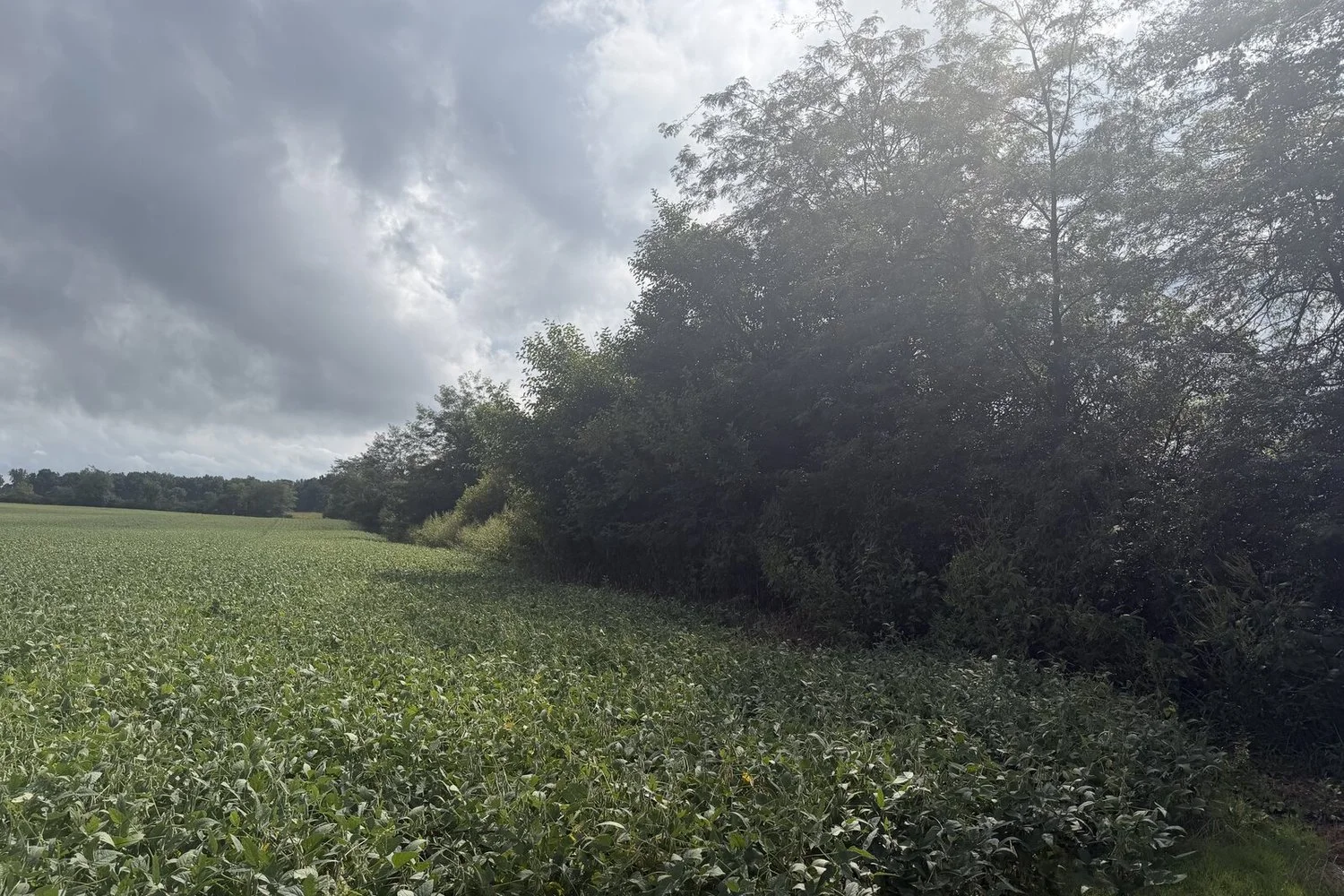
A grown-up field edge on an east central Indiana job, photographed in summer.
Quick facts
- When: late October into winter, on days the ground will carry the machine.
- What we clear: brush and trees (mulcher up to about 9 inches, shear up to 12 inches), fence rows, field edges, overgrown pasture and invasive brush.
- Stumps: cut low.
- Material: mulched in place or hauled off, your choice. No burn piles.
- Selective work: we mark what stays before the machine starts, such as brushy cover for small game or trees you want to keep.
- After the job: regrowth follow-up after clearing is offered.
- Equipment: a John Deere 333G with a mulcher head.
- Pricing: free estimate and firm written price after consultation.
- Area: Jay County, Randolph County and the rest of east central Indiana, plus west central Ohio.
Why does fall land clearing in Jay County, Indiana work so well?
Late fall gives you a clear view of the ground, keeps the work out of the peak cottontail nesting season, and leaves time to plan around the hunts. Once native trees and shrubs drop their leaves, a fence row or woods edge is much easier to read. The Indiana DNR fact sheet on Asian bush honeysuckle says these shrubs are "the last to lose their leaves in the fall," so green shrubs standing in an otherwise bare edge are easy to pick out and check.
Timing matters for wildlife too. A 1999 USDA NRCS and Wildlife Habitat Council leaflet on the eastern cottontail, posted on the Indiana DNR wildlife habitat fact sheets page, lists the peak nesting season as February to September and says mowing, disking and burning should be "implemented outside the nesting season." Late October falls after that window.
Ground conditions decide the exact days. Purdue's Indiana soils manual says large equipment "has much potential to compact the soil but only if it is used under wet conditions." We schedule each job for days when the ground will carry the machine. When fall rain sets in, frozen ground is the next window, and our post on why winter forestry mulching works on frozen ground covers that season.
Does land clearing have to mean clearing everything?
No. Selective clearing removes the brush you don't want and keeps the cover you do, and a forestry mulcher can work around the trees and patches you mark. That matters for small game. The Indiana DNR sheet on coverts cites a Missouri study that found "wintering quail coveys were usually located within 70 feet of brushy vegetation at all times." The cottontail leaflet says the clearing of fence rows, hedgerows and grassy buffers along woodland edges and field borders "has had a significant effect on eastern cottontail populations," and that preserving brushy cover can help landowners boost local cottontail numbers.
The other side of the picture is invasive brush. The DNR honeysuckle fact sheet says these shrubs "grow so densely they shade out everything on the forest floor," which means "a great reduction in the food and cover available for birds and other animals." Clearing the honeysuckle and keeping the native brush gives you an open, usable edge without stripping out the cover.
A selective plan on a Jay County farm might include:
- Clearing a fence row back to the wire while leaving brushy patches at the corners.
- Opening a lane along a woods edge and keeping the thicker cover behind it.
- Taking out bush honeysuckle, autumn olive and multiflora rose and keeping the trees you name.
- Leaving some small growth and a few trees where you want cover for rabbits and quail.
Our honeysuckle and invasive brush removal page covers the species we clear most often.
How does hunting season affect a fall clearing schedule?
Hunting dates set the calendar on a lot of Jay County ground, so tell us who hunts the property and when, and we will plan the work around it. The Indiana DNR's 2026-27 seasons include:
- Deer archery: Oct. 1, 2026 to Jan. 3, 2027
- Deer firearms: Nov. 14 to 29, 2026
- Deer muzzleloader: Dec. 5 to 20, 2026
- Rabbit: Nov. 1, 2026 to Feb. 28, 2027
- Quail (north of I-74): Nov. 1 to Dec. 15, 2026
If your ground is in Ohio, the Ohio DNR's 2026-27 deer seasons include archery from Sept. 26, 2026 to Feb. 7, 2027 and youth gun on Nov. 21 and 22. Gun season runs Nov. 30 to Dec. 6 and Dec. 19 to 20, and muzzleloader runs Jan. 2 to 5, 2027. Some landowners want lanes and field edges done before the firearms weeks, and others would rather wait until the hunts are over. Either way works. Check the DNR rules for your own hunting, since season dates and regulations come from the state.
What can a forestry mulcher clear on a Jay County property?
The mulcher handles trees up to about 9 inches, and the shear handles trees up to 12 inches. Stumps are cut low, and the material is mulched in place or hauled off. We run a John Deere 333G with a mulcher head. Common fall work around Portland, Jay County and the Fort Recovery area includes:
- Fence row clearing where the brush has crept into the field
- Pasture reclamation on overgrown fields, where the ground has grown up in thorns and saplings
- Bush honeysuckle, multiflora rose, autumn olive and Callery pear along woods edges
- Brush removal and property cleanup around barns, bins and outbuildings
Regrowth follow-up after clearing is offered. For more on the town-by-town work, see land clearing and forestry mulching in Portland, Indiana and forestry mulching in Fort Recovery, Ohio.
How do I get a price for fall land clearing in Jay County?
Call or text (765) 305-5239 for a free estimate and firm written price after consultation. At the free estimate, we walk the property with you and talk through what to clear and what to keep, along with timing around crops and hunts. Our page on what drives land clearing cost explains the factors that shape a written price.
FAQ
Is late fall a good time for land clearing in Jay County, Indiana? Yes, for most properties. The leaves are down, the peak cottontail nesting season of February to September is over, and the work can be planned around hunting dates. Ground conditions decide the exact days.
Can you leave some brush and trees for rabbits and quail? Yes. We mark what stays before the machine starts, so you can keep brushy patches and a few trees for small game and clear the rest.
Will clearing get in the way of deer season? It doesn't have to. Tell us when the ground is hunted and we will schedule around it. Indiana's 2026 deer firearms season runs Nov. 14 to 29, and Ohio's deer gun season runs Nov. 30 to Dec. 6 and Dec. 19 to 20.
Do you work in Fort Recovery and Mercer County, Ohio? Yes. We serve Fort Recovery and Mercer County, Ohio, along with Portland and the rest of Jay County, Indiana.
How big a tree can you clear? The mulcher handles trees up to about 9 inches, and the shear handles trees up to 12 inches. Stumps are cut low, and the material is mulched in place or hauled off.
Planning fall land clearing in Jay County or Fort Recovery? Request a free estimate or call or text for a free estimate and firm written price after consultation.
Sources: Indiana DNR 2026-27 hunting seasons and wildlife habitat fact sheets (coverts, eastern cottontail), Indiana DNR Asian bush honeysuckle fact sheet, Ohio DNR 2026-27 hunting seasons, Purdue University Indiana Soils manual.
Ridgeline Corridor Services LLC, 2672 East 500 S, Winchester, IN 47394, (765) 305-5239, hayes@ridgelinecorridorin.com, ridgelinecorridorin.com