
Forestry Mulching in Indiana: How It Works, What It Costs, and When to Book
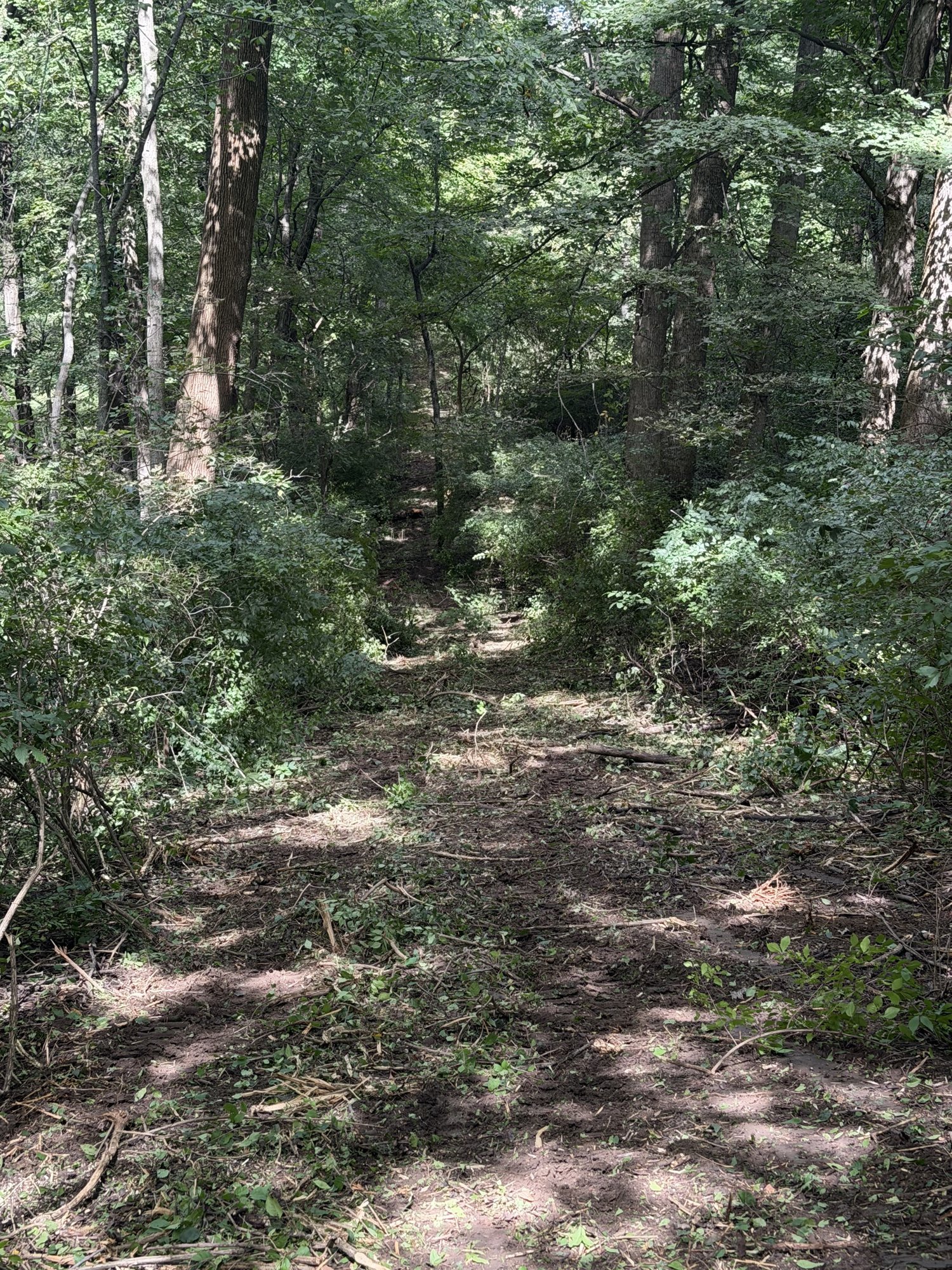
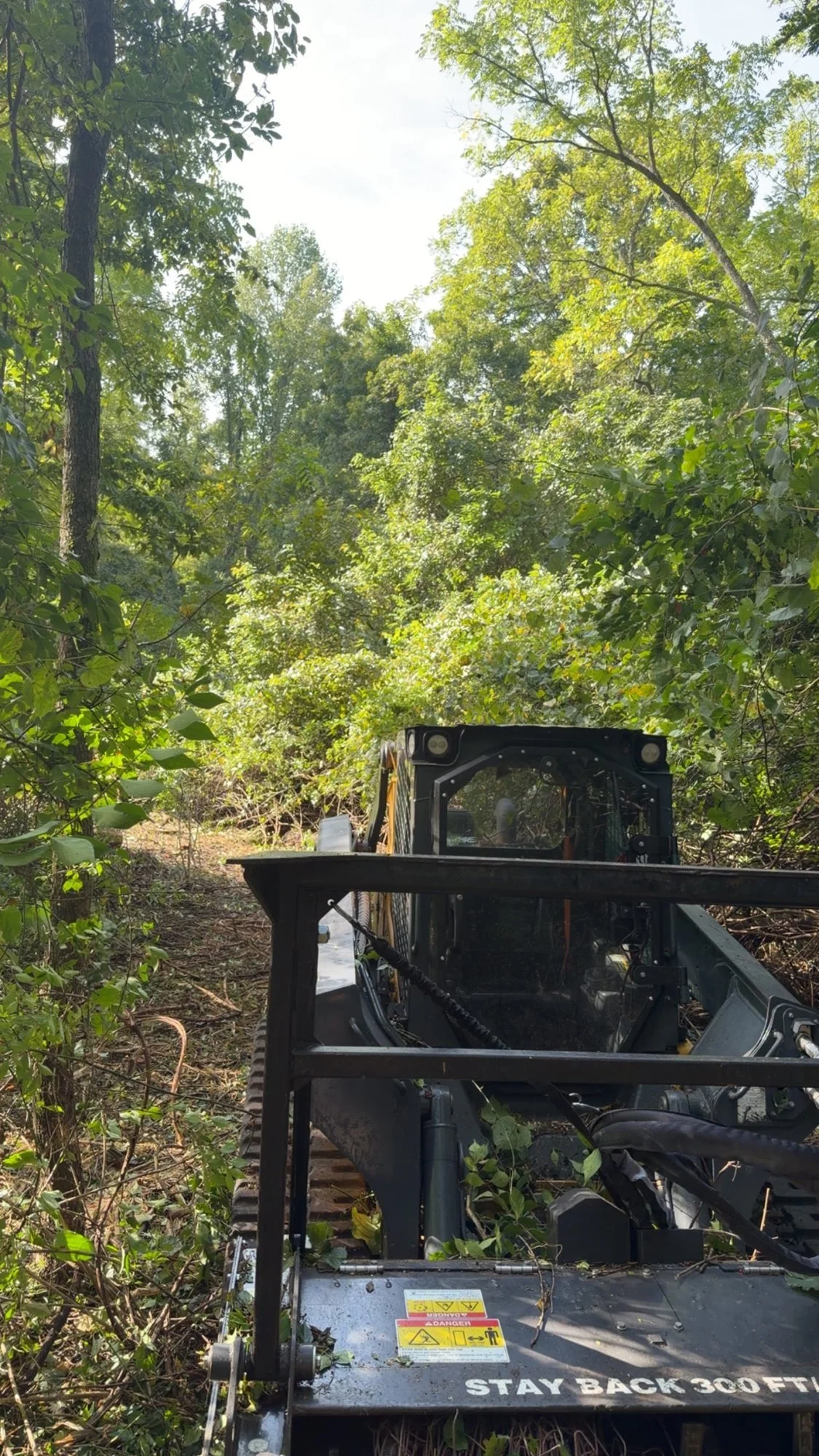
If you own woods, a fence row, or a field edge in east central Indiana that has outgrown a brush hog, forestry mulching is often the fastest way to take it back. It's the main service at Ridgeline Corridor Services in Randolph County, so here is how it works, what drives the price, and what to expect. The photos below are from a wooded job in Richmond, Indiana.
What is forestry mulching?
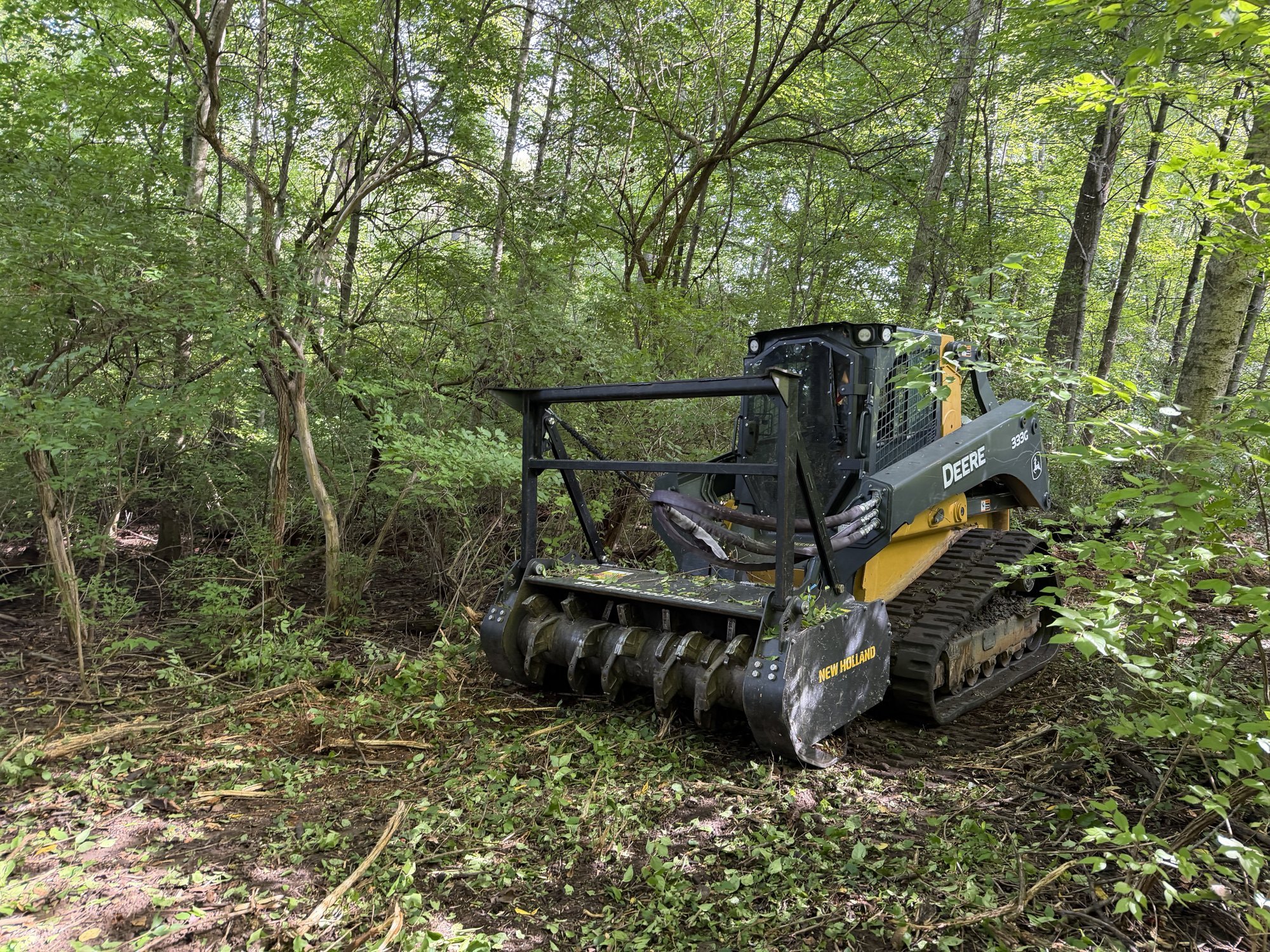
Forestry mulching uses a tracked machine with a rotating mulching head to grind brush, saplings, and small trees where they stand. The result is a layer of wood chips left on the ground. There is no pile to burn, no stump pulling first, and no truck hauling logs away.
How forestry mulching works
Site walk. We look at the property with you and mark what stays: large trees, fences, property lines, and anything underground or overhead.
Mulching. The machine works through the growth and cuts it down at ground level.
Mulch left in place. The chips stay as a ground cover that helps hold soil.
Final walk-through. We check the result with you before we leave.
Forestry mulching vs. bulldozing
Both clear land, but they treat the ground very differently. According to equipment maker FAE:
Bulldozing disturbs the soil and can leave bare ground open to erosion. Mulching disturbs it far less.
Bulldozing creates debris that must be hauled or burned. Mulching leaves it on site as chips.
Mulch breaks down over time and returns nutrients to the soil.
Skipping the burn pile can also mean skipping burn permits.
Mulching is not right for every job. It cuts growth at the surface, and some plants, such as bush honeysuckle, can resprout from the roots. If you need stumps pulled for a foundation or a pond, a different method may fit better. We'll tell you which one your site needs.
What affects the cost of forestry mulching
The price depends on the site. What moves it on any job:
Density. Thick overgrowth takes longer than light brush.
Tree size. Bigger trunks take more machine time.
Terrain. Steep, wet, or rocky ground slows the work.
Access. Fences, gates, and distance from our base can add time and travel.
Every job is quoted on the site itself. Send a few photos, the address, and a rough acreage, and we can give you a faster estimate.
Why fall is a good time to clear in Indiana
Invasive shrubs like bush honeysuckle stay green after native trees drop their leaves, which makes them easy to spot (Purdue Extension). With the leaves down you can also see the lay of the land, property lines, and fence rows. Clearing now means a ready site for spring planting, building, or next hunting season.
Who uses forestry mulching
Landowners reclaiming overgrown woods, pasture, and fence rows
Farmers clearing field edges and drainage lines
Hunters opening trails and shooting lanes
Builders prepping a homesite
Utility and right-of-way corridors that need to stay clear
Forestry mulching FAQ
Does mulching remove the stumps?
It grinds growth down to ground level and leaves low stumps. Some species resprout, so follow-up treatment can be part of the plan.
How big a tree can you mulch?
It depends on the machine and the trees. Tell us the trunk sizes and we'll say honestly whether your site is a mulching job.
Do I need a permit?
Mulching avoids burn permits, but rules for streams, ditches, and wetlands can still apply. Check with your county if the site is near water.
How long does it take?
That depends on acreage and density. We give a time estimate with every quote.
What areas do you serve?
Randolph County and about 30 to 50 miles around it, including Winchester, Farmland, Union City, Portland, and Richmond, with larger commercial and utility jobs farther out. We are also expanding into west central Ohio.
Get a free estimate
Call or text Ridgeline Corridor Services at (765) 305-5239, Monday through Friday, 7 AM to 5 PM. You can also see our work on the homepage and our yard restoration page.